Biagio Maffettone’s Guide to Jumbo Mortgage Loans in Westchester County, NY
Buying a higher-priced home in Westchester County can be an exciting step, but the financing deserves just as much attention as the property itself.
For some buyers, a conventional conforming mortgage may provide everything they need. For others, particularly those purchasing higher-value homes, the amount they want to borrow may exceed the applicable conforming loan limit. In those situations, a jumbo mortgage may be an option worth exploring.
But jumbo financing is not simply a larger version of a conventional mortgage.
The underwriting process can be different. Documentation may be more extensive. The lender may take a closer look at assets, reserves, income, credit, the property and the overall financial picture. For homebuyers in Westchester County, NY, understanding those differences before making an offer can help avoid surprises later.
As a mortgage professional serving Westchester County, I believe the most useful mortgage conversations happen before a buyer falls in love with a house. Understanding the financing early gives you a much clearer picture of what you can comfortably pursue.
What Is a Jumbo Mortgage?
A jumbo mortgage is generally a non-conforming mortgage that exceeds the applicable conforming loan limit for the property's location and type.
The Federal Housing Finance Agency, or FHFA, establishes annual conforming loan limits for mortgages that can be purchased or guaranteed by Fannie Mae and Freddie Mac. A mortgage above the applicable limit generally falls into jumbo or non-conforming territory.
For 2026, the conforming loan limit for a one-unit property in Westchester County, New York, is $1,209,750. The applicable limits are higher for two-, three-, and four-unit properties.
One important distinction is often overlooked:
The conforming limit applies to the loan amount, not the purchase price of the home That means a home priced above $1.2 million does not automatically require a jumbo mortgage.
For example, a buyer purchasing a $1.5 million home could potentially keep the mortgage within the conforming limit by making a sufficiently large down payment, subject to the applicable loan program and qualification requirements.
Another buyer purchasing the same home with a smaller down payment could need a jumbo mortgage. That is why the purchase price alone does not tell you which type of mortgage you need.
Why Jumbo Mortgages Are Relevant in Westchester County
Westchester County has a wide range of residential real estate, including communities where higher-value homes are common. Buyers looking in places such as Scarsdale, Rye, Harrison, Chappaqua, Bedford, Armonk, Larchmont, White Plains and other Westchester communities may encounter properties where the required mortgage amount exceeds the applicable conforming limit.
But a higher purchase price does not automatically mean that a jumbo mortgage is the best financing choice.
The first question should be:
How much do I actually need to borrow?
The second should be:
What financing structure makes sense for my financial situation?
Those questions are more useful than simply asking how much a lender is willing to approve. Being approved for a certain loan amount does not necessarily mean that borrowing the maximum amount is the right decision for your household.
How Is a Jumbo Mortgage Different From a Conventional Mortgage?
Jumbo loans are generally less standardized than conforming mortgages. The Consumer Financial Protection Bureau explains that non-conforming loans can differ significantly from one lender to another in terms of requirements, pricing and features. That is important for borrowers. With a jumbo mortgage, you may find that one lender's requirements are different from another lender's requirements.
The lender may consider:
Credit history
Income
Employment
Existing debts
Available assets
Cash reserves
Down payment
Property type
Property value
Occupancy
Overall financial profile
The exact requirements vary by lender and loan program.
That is one reason I encourage borrowers to start the conversation early rather than waiting until they have already signed a purchase contract. Does a Home Above $1.2 Million Automatically Require a Jumbo Loan?
No.
This is one of the most important points for Westchester buyers to understand. The conforming loan limit applies to the amount borrowed, not simply the price of the house. Imagine a buyer is purchasing a $1.5 million single-family home.
If the buyer puts enough money down to bring the mortgage amount below the applicable 2026 conforming limit, the financing may potentially remain within conforming territory, assuming all other requirements are met. If the buyer wants to make a smaller down payment and the resulting mortgage exceeds the applicable conforming limit, jumbo financing may become relevant.
The same purchase price can therefore lead to very different mortgage strategies depending on the buyer's down payment and financial objectives.
What Do Lenders Look At When Reviewing a Jumbo Mortgage?
A jumbo mortgage requires more than simply demonstrating that you earn a high income. The lender wants to understand the overall financial picture.
Credit
Your credit history provides information about how you have managed debt over time. Jumbo lenders may have specific credit requirements, but there is no single universal credit-score requirement for every jumbo mortgage. Before beginning the home search, review your credit profile and address potential issues where appropriate. If there are errors on your credit report, recently opened accounts or significant new debts, it is better to understand those issues early.
Income
Income can become particularly important when the borrower has a complex financial profile. A salaried employee with straightforward W-2 income may have a relatively simple documentation process. A self-employed borrower, business owner, executive, investor or commissioned professional may have multiple income sources that require additional documentation and analysis Depending on the loan program, documentation may include tax returns, pay statements, business financial information, investment income documentation or other records.The important thing is not to assume that every type of income will be evaluated in exactly the same way. If your income is complicated, discuss it early.
Assets
Your available assets can also matter. A lender may need to understand not only where the down payment is coming from, but also what assets remain available after closing.
This is particularly important for higher-value purchases. A buyer may have enough money for a down payment but still need to think carefully about how much cash should remain available after the transaction.
Reserves
Cash reserves can become an important consideration with jumbo financing. Reserves are essentially funds that remain available after closing rather than being committed entirely to the purchase. The specific amount required varies by lender and loan program. But regardless of the lender's requirements, maintaining reasonable liquidity can be an important part of responsible homeownership. A higher-value home can come with significant property taxes, insurance, maintenance and repair expenses. You don't want your entire financial plan to depend on having every available dollar tied up in the property.
How Much Should You Put Down on a Jumbo Mortgage?
There is no universal down payment that applies to every jumbo mortgage. You may hear people say that a jumbo borrower needs to put 20% down. That is not a universal rule.
Down payment requirements can vary based on the lender, loan program, loan amount, property type, occupancy and borrower qualifications. Some borrowers may decide that a larger down payment makes sense, Others may prefer to preserve liquidity Both approaches can have advantages and trade-offs.
Putting more money down reduces the amount borrowed and may reduce the monthly payment But it also means putting more of your available capital into the property. Keeping more money available can provide greater liquidity, but borrowing more generally means a larger payment and potentially higher borrowing costs. The right answer depends on the bigger financial picture.
Don't Focus Only on the Mortgage Rate
Interest rates matter, but they are only one part of the overall mortgage picture. When comparing jumbo mortgage options, look beyond the rate and consider the complete cost and structure of the loan, including the APR, points, lender fees, closing costs, loan term, estimated monthly payment, property taxes, homeowners insurance, cash required to close, reserve requirements and whether the loan has a fixed or adjustable rate.
Two mortgage offers can have similar interest rates but differ in fees, structure and cash requirements. That is why I encourage borrowers to look at the entire financing picture rather than choosing a mortgage based on one number.
Property Taxes Matter in Westchester County
One of the easiest mistakes a buyer can make is focusing only on the mortgage payment. In Westchester County, property taxes can be a significant part of the overall cost of owning a home, so they should be considered when evaluating affordability.
Look at the complete housing expense, including principal, interest, property taxes, homeowners insurance and other applicable costs. A mortgage payment that looks manageable on its own can feel very different once everything is added together. The goal should not simply be to qualify for a mortgage, but to understand what the home will actually cost to own.
The Property Itself Can Matter
With a higher-value property, the property itself becomes an important part of the underwriting process. Some homes are straightforward to value, while others may have extensive acreage, unusual layouts, major renovations, multiple structures or other characteristics that can make comparable sales more difficult to establish.
That can make the appraisal particularly important. The purchase price and appraised value are not automatically the same, and if an appraisal comes in below the contract price, the buyer may need to consider additional funds, renegotiation where possible, an appropriate appraisal review process or another financing approach.
Understanding these possibilities early can help buyers approach the transaction with realistic expectations rather than discovering potential financing issues after they are already under contract.
Jumbo Mortgages for Self-Employed Borrowers
Westchester County is home to many business owners, professionals, executives and entrepreneurs whose income may come from multiple sources. For these borrowers, income documentation can sometimes be more detailed than it is for someone with a straightforward salary.
Depending on the loan program and individual circumstances, a lender may need to review tax returns, business income, financial statements or other documentation. If you are self-employed or have a more complex financial profile, discussing your situation early can help identify documentation requirements before you are under contract.
The objective is not to make the process more complicated. It is to make sure the lender has an accurate picture of your financial position and that potential questions are addressed early.
Jumbo Mortgage or Conforming Mortgage?
The choice between a jumbo mortgage and a conforming mortgage is not always as simple as looking at the purchase price. If your mortgage amount can remain within the applicable conforming loan limit, a conforming loan may be worth considering. If the amount you need to borrow exceeds that limit, jumbo financing may provide another option.
But the loan limit is only part of the decision. Consider how much cash you want to put into the property, how much liquidity you want to retain, what monthly payment fits your budget, how predictable your income is, and what the property's taxes and insurance will add to the overall cost.
The goal is to choose a financing structure that fits your broader financial circumstances, rather than simply selecting the largest loan amount you can qualify for.
Practical Tips Before Applying for a Jumbo Mortgage
If you are considering a higher-priced home in Westchester County, start by understanding your income, debts, assets, credit profile and available cash. Getting pre-approved early can help you understand your financing position before you begin negotiating on a property.
If you are self-employed or have multiple sources of income, organize your financial documentation early. Also think carefully about liquidity rather than automatically putting every available dollar toward the down payment. You may want to preserve cash for reserves, repairs, renovations or other financial priorities after closing.
When comparing mortgage options, look beyond the advertised interest rate and consider the complete cost and structure of the loan. And if you do not understand a loan term, fee or requirement, ask questions. A mortgage is a significant financial commitment, and you should feel comfortable understanding what you are agreeing to.
Questions Westchester Homebuyers Should Ask About Jumbo Financing
Before moving forward, ask what loan amount would put you into jumbo financing, how much you may want to put down and how much cash you should consider keeping available after closing. Understanding how your income will be evaluated and what documentation will be required is equally important, particularly if you are self-employed or have multiple income sources.
It is also worth asking how the property will be appraised, what taxes and insurance may add to your monthly housing expense, and what the total closing costs are expected to be. Ask whether the rate is fixed or adjustable, what the APR is and what factors could potentially affect your closing timeline.
The answers will depend on your individual circumstances, the property and the lender or mortgage program involved. The important thing is to have these conversations early.
The Most Important Jumbo Mortgage Question
There is one question I believe is more important than simply asking, "How much can I borrow?"
It is: "How much should I borrow?"
Those are not necessarily the same thing. A lender can evaluate what you may qualify for, but the amount that makes sense for you depends on your income, expenses, assets, reserves, financial priorities and comfort with the long-term commitment.
For a higher-value home, the mortgage should be considered alongside the rest of your financial life. A successful closing is important, but so is being comfortable with the financial commitment after you receive the keys.
Biagio Maffettone: Mortgage Professional Serving Westchester County
Biagio Maffettone is a mortgage professional serving homebuyers and homeowners throughout Westchester County, NY, and surrounding communities. His work includes residential mortgage financing and helping clients explore financing options based on their individual circumstances, including conventional, FHA, VA and jumbo mortgage solutions.
Biagio's approach is centered on clear communication, understanding the client's goals and helping borrowers understand their options before making an important financial decision. For someone purchasing a higher-priced home in Westchester County, that means looking beyond the purchase price and considering the loan amount, down payment, income, assets, reserves, taxes, insurance, property characteristics and overall affordability.
Looking for Jumbo Mortgage Solutions in Westchester County?
If you're considering purchasing a higher-priced home in Westchester County, NY, an early conversation can help you understand your financing options before you make an offer. Whether you're exploring jumbo financing, comparing mortgage programs or trying to determine what structure makes sense for your circumstances, let's talk.
Looking for your next mortgage solution? Let's talk.
📞 Contact Biagio Maffettone
Mortgage Professional | NMLS #409994
Westchester County, NY
Call: +1 (914) 841-2226
Disclaimer
This article is provided for general educational and informational purposes only. It is not an offer to lend, a commitment to provide financing, a guarantee of approval, or a guarantee of any particular interest rate, loan term, fee or other mortgage condition. Mortgage programs, interest rates, fees, loan limits, eligibility requirements and underwriting standards can change and vary based on the lender, loan program, borrower qualifications, property type, occupancy, loan amount and other transaction-specific factors. The 2026 conforming loan limits referenced in this article are based on information published by the Federal Housing Finance Agency and should be verified for the specific property and transaction. Nothing in this article should be interpreted as individual financial, tax, legal, investment or lending advice. Prospective borrowers should consult appropriate licensed professionals and obtain current disclosures and official Loan Estimates before making a mortgage or real estate financing decision.
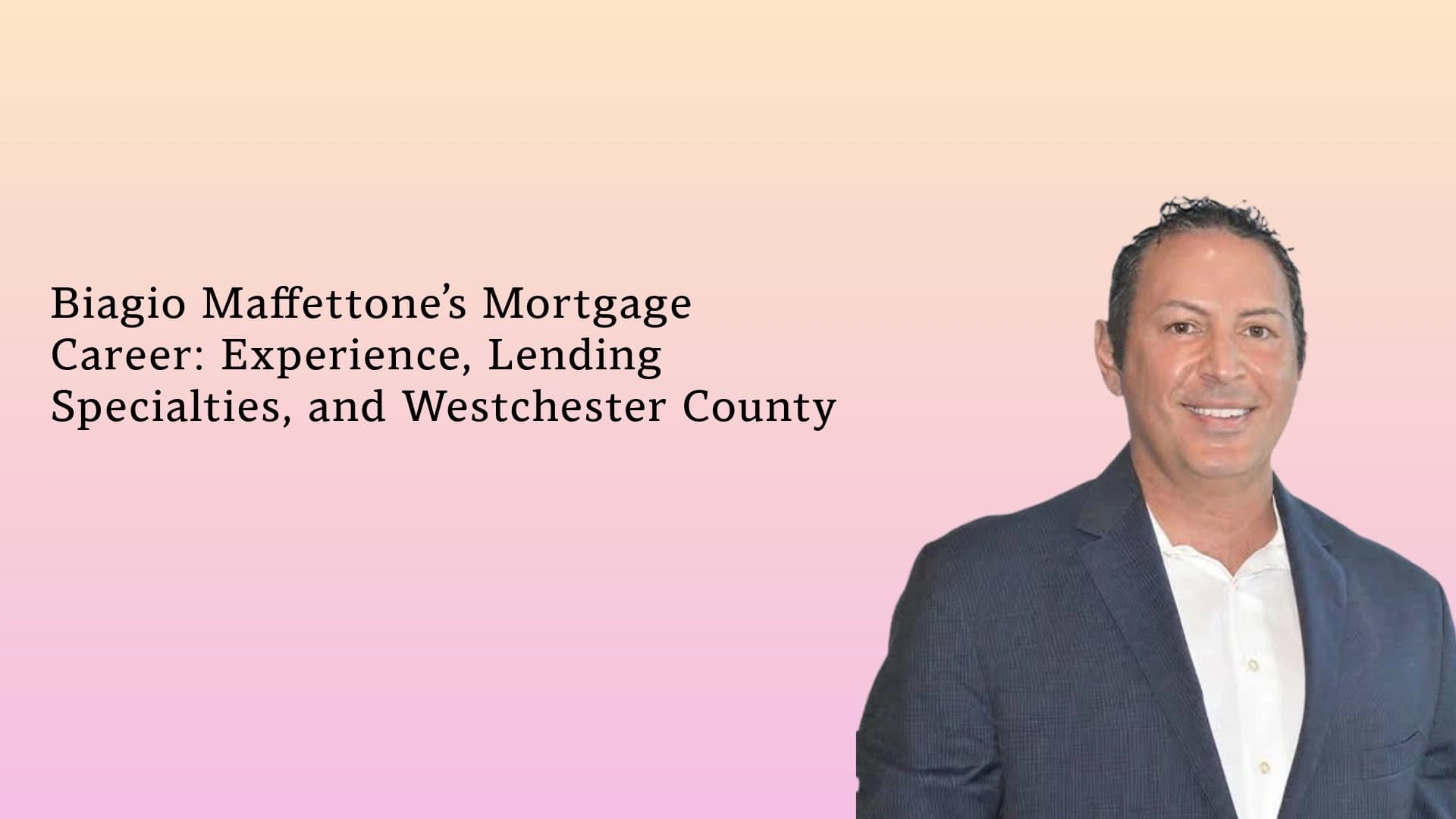
Written by Biagio Maffettone
Westchester Mortgage Expert and Licensed Mortgage Loan Originator with over 20 years of experience helping clients achieve their homeownership goals.

.webp&w=3840&q=75)
.jpeg&w=3840&q=75)
